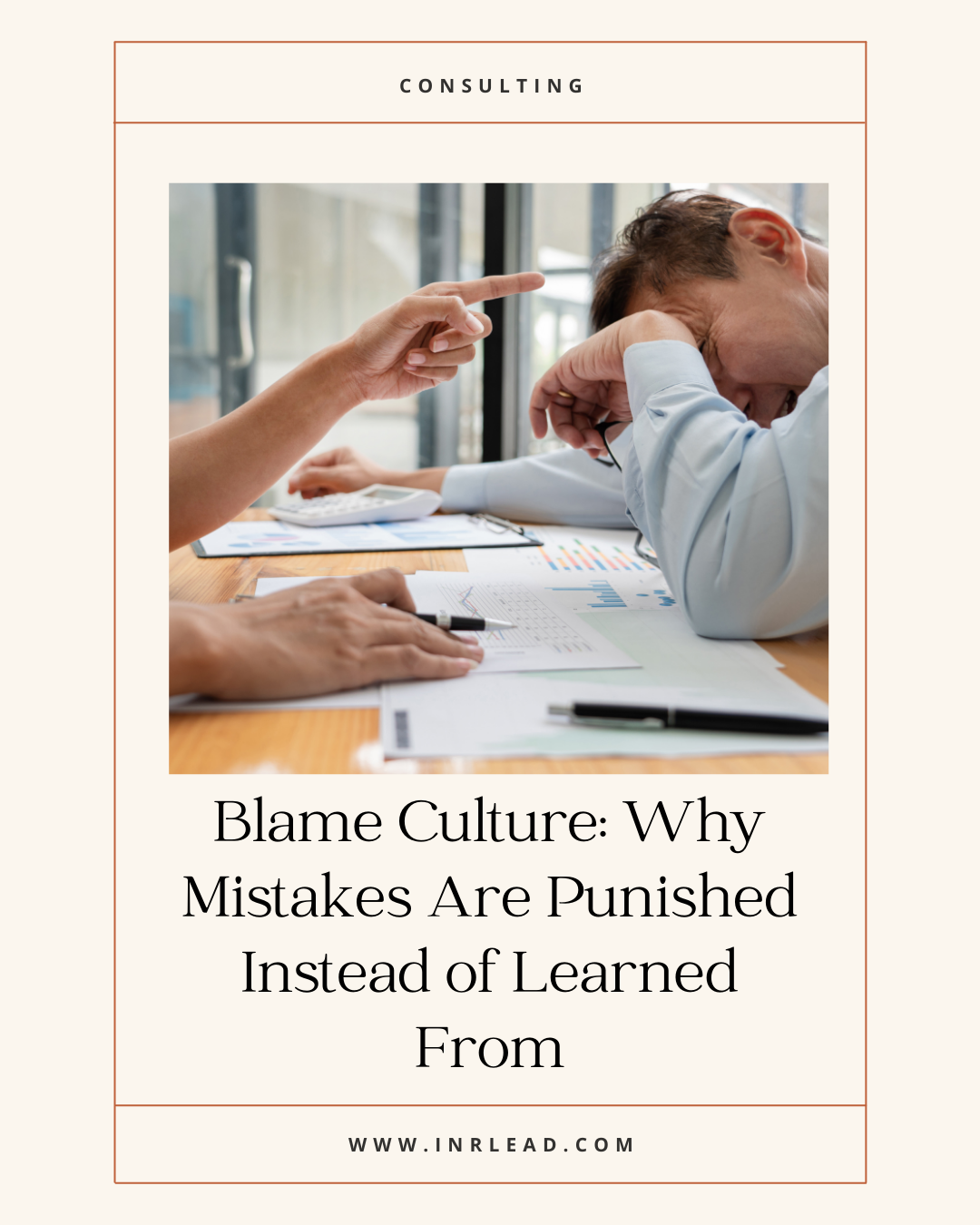
The Blame Culture: Why Your Organization Is Exhausted Even When Systems Look Fine
Your organization isn't broken. But people are exhausted. They're not exhausted because work is hard—they're exhausted because when things go wrong, the first instinct is to find who failed rather than what failed. That creates constant anxiety. People are watching their backs instead of watching for solutions.
What Blame Culture Looks Like
In blame culture, failures are treated as personal failings rather than opportunities to learn. When a clinician makes a mistake, the question is 'who messed up?' rather than 'what system contributed to this?' When a nonprofit campaign underperforms, staff are questioned rather than whether the approach was viable. When an academic research project stalls, the faculty member is questioned rather than whether they had adequate resources.
Why It Exhausts People
Blame culture creates constant vigilance. People spend mental energy protecting themselves rather than solving problems. They hide failures instead of surfacing them early. They over-document to prove they did things correctly. They become risk-averse because taking initiative means risking blame if something doesn't work out. Over time, this creates an organization where people go through the motions but don't bring their full selves to work.
The Organizational Cost
Blame culture prevents learning. Organizations can't learn from failures if people hide them. It prevents innovation—people won't try new approaches if failure means personal blame. It slows response to problems because people spend time protecting themselves rather than fixing what's broken. It increases turnover because talented people leave when they realize failure is treated as a character flaw rather than a learning opportunity.
How to Shift It
Start by modeling the behavior you want. When something goes wrong, ask 'what system or process contributed to this?' before asking 'who was involved?' Separate the person from the problem. Celebrate public failures (that taught something) the same way you celebrate successes. Make it genuinely safe to surface problems early. The shift from 'who failed?' to 'what can we learn?' is foundational to organizational resilience.
Reflection Questions
• In our organization, when something goes wrong, what question do we typically ask first? 'Who failed?' or 'What system contributed?'
• Who on our team is most likely to hide mistakes? What would need to change for them to feel safe surfacing problems early?
• What's one failure we could learn from as an organization instead of assigning blame?